
You can’t power the future with yesterday’s leadership identity.
AI won’t replace experienced leaders. But an execution-only identity might limit your next level of impact. In the GenAI era, leadership leverage is shifting from personal execution to designing how value gets created, distributed and scaled.
Chetan Bhambri
3/11/20262 min read
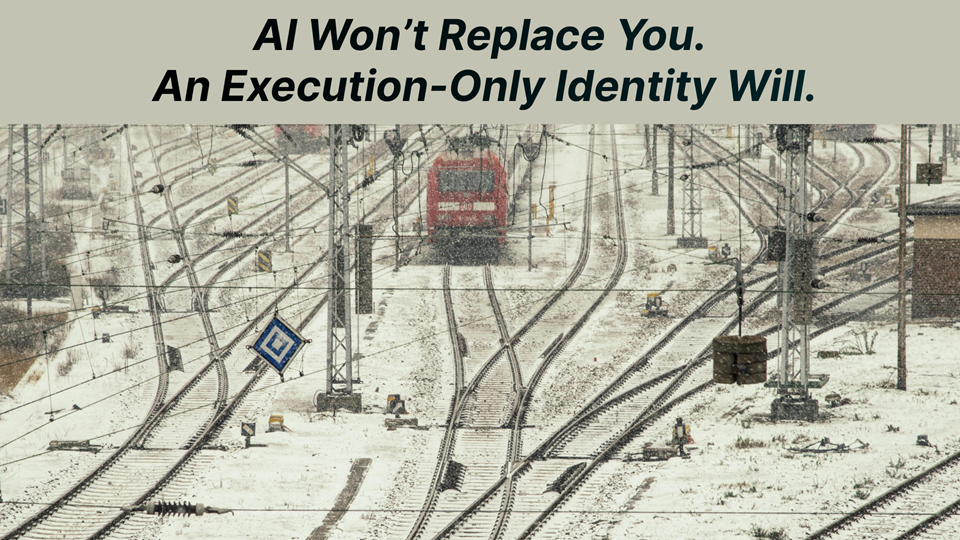
AI is not replacing leaders.
It is exposing the limits of leadership models built on personal execution.
For years, organizations measured leverage through revenue per employee. Efficiency, predictability, and execution excellence defined strong leadership.
But GenAI is quietly shifting where value is created.
"Software companies are embedding agentic AI capabilities into their core products."
Today, advantage increasingly comes from innovation and capability systems; how quickly organizations can experiment, learn, and orchestrate capabilities across people and intelligent tools.
Many technology organizations were designed for a different mandate: reliable execution. That model produced exceptional specialists and disciplined delivery teams.
But AI changes the unit of leverage.
Take a simple example.
A senior developer who once wrote most of the code, tests, and documentation themselves may now use AI tools to generate much of that work, focusing instead on guiding the architecture, reviewing outputs, and shaping the final solution.
"85% developers regularly use AI tools... 62% rely on AI coding assistants/agents for orchestration across stages."
The technical depth still matters, but the real leverage shifts from writing code to directing systems of capability.
This shift is subtle but profound.
Leadership value moves from execution excellence to orchestration capability; from solving problems personally to shaping how problems get solved across teams, tools, and processes.
In a recent coaching conversation, I noticed this dilemma and asked the leader:
“Is most of your leadership leverage coming from your personal execution, or from the systems and people you’ve enabled to deliver without you?”
So how can leaders shift identity toward this new value?
1. Shift from problem solving to problem framing AI and teams can generate many solutions. The leader’s leverage increasingly comes from defining the right problem, context, and trade-offs.
2. Design decision velocity, not decision control Instead of being the approval point, focus on clarifying decision rights, guardrails, and accountability so teams can move faster without waiting for you.
3. Architect human + AI capability Identify where human judgment matters most and where AI can amplify speed, analysis, or experimentation. Leadership value increasingly lies in designing how people and intelligent tools work together.
"Equipping the C-suite with skills to overcome the common challenges to implementing new gen AI initiatives will most likely require a multifaceted approach."
The leaders who thrive in the AI era will not be the ones who execute the most.
They will be the ones who redesign how value gets created, distributed, and scaled.
This is the third article in the series exploring the connection between identity, systems, and impact.
References: